
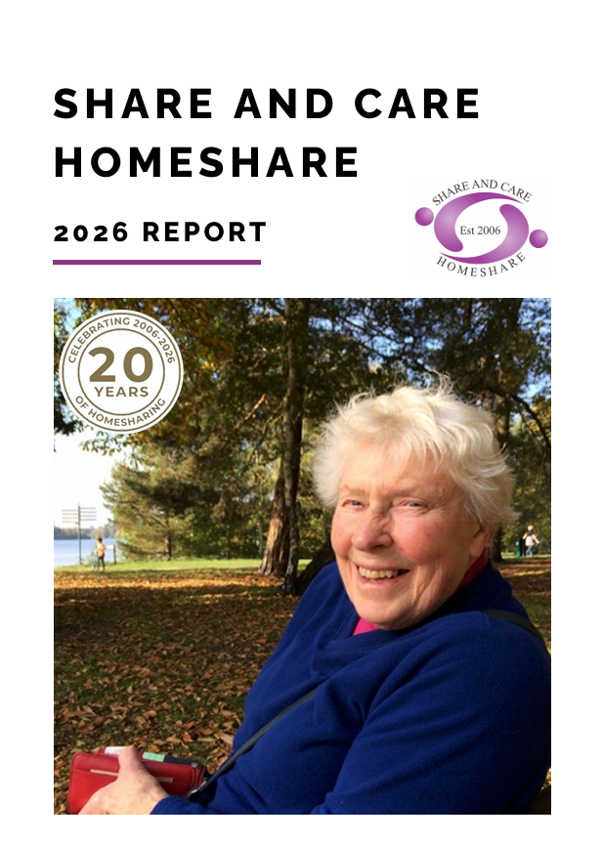
Share and Care Homeshare, the UK’s largest homeshare Community Interest Company (CIC), marks its 20th anniversary with the release of its ‘2026 Homeshare Impact Report’, revealing how this innovative model is reshaping the social care landscape and enabling older and vulnerable people to live safely and independently in their own homes for longer.
As demand grows for more flexible, compassionate care solutions, the report highlights how homesharing is increasingly supporting people living with dementia and other long-term health conditions to remain safely and independently in their own homes, while reshaping expectations around ageing and care in the UK.
The report highlights a clear shift in the drivers behind homeshare arrangements, with dementia and memory loss accounting for the majority (51%). Other key drivers include reduced mobility (25%), eyesight problems (9%), depression and anxiety (7%), Parkinson’s disease (5%), and hearing loss (3%). These findings reflect the growing complexity of needs among ageing populations, and the increasing demand for flexible, person-centred solutions that sit outside traditional residential care.
Homeshare, where a carefully matched individual lives with a householder in exchange for companionship and practical support, is a powerful preventative tool within social care.
The report underscores the wide-ranging benefits of homesharing, including:
• Overnight reassurance and enhanced security
• Reduced social isolation and loneliness
• Support with everyday tasks
• A trusted, friendly presence in the home
Crucially, homeshare is helping to rewrite the narrative around ageing and care, challenging the assumption that older people must move into residential homes when they need support. Instead, homesharing offers a compelling alternative, and one where people can remain independent, connected, and in control of their own lives.
The second most common reason people turn to homeshare is reduced mobility. Among those who were considered a falls risk before entering a homeshare arrangement, 77% have not experienced another fall since a sharer moved in; demonstrating how simple, human-centred support can have profound preventative outcomes.
The report provides a detailed snapshot of homesharing across the UK:
• Average age of householders: 87
• Youngest householder: 45
• Oldest householder: 98
• 71% female, 23% male, 6% couples
Sharers also reflect a diverse demographic:
• Average age of sharers: 41
• Youngest sharer: 22
• Oldest sharer: 78
• 89% choose to become sharers because they want to help someone else
The data highlights the intergenerational nature of homesharing, with people from all walks of life coming together to form meaningful, mutually beneficial relationships.
“Over the past 20 years, we’ve seen first-hand how homeshare can transform lives. Our 2026 report highlights that the primary drivers – particularly dementia, mobility challenges and loneliness – are exactly where compassionate, person-centred support is needed most.
With care costs escalating and less public funding available, families are searching for sustainable alternatives. Homeshare not only represents excellent value, but works alongside existing care to help people remain safely in their own homes. Homesharing is changing lives,” state Caroline Cooke and Amanda Clarke, directors, Share and Care Homeshare.
As Share and Care Homeshare celebrates two decades of impact, the organisation is calling for greater recognition of homesharing within mainstream social care strategies. The 2026 report highlights that by combining practical support with companionship, homeshare delivers outcomes that matter, not just for individuals and families, but for the sustainability of the wider health and social care system.
View and download the full report HERE